

The other day, when I was in the store upgrading my cell phone I was engaged in a conversation with the sweet, helpful girl who was handling the process. She had asked me what field of work I was in, and as usual, when I gave her my answer she wondered if I could give her some advice.
As I have mentioned, in almost a decade of working in Wellness I have shared my personal advice (when asked for it) with my clients, my friends, and my family, countless times. My hope is always for each person to find a solution that works well for their body, by giving them my tried-and-true ideas.
That particular day in the store, the girl (in her early twenties) was explaining to me that she really wanted to start working out at the gym more often but that muscle soreness was preventing her from performing workouts regularly. She provided me with a bit more information, telling me that she would enthusiastically go and do a weight lifting workout and then find that the following days she would be too sore to even walk. She revealed that being that terribly sore discouraged her and also made it impossible for her to complete another workout for at least a week or two. She was frustrated with her lack of consistency and was losing hope of making any progress. The advice she was seeking from me came as the question “what do I recommend for preventing and/or treating muscle soreness?”. So… as I always like to start with when giving my advice, I told her that I will give her suggestions based on the practices that I do for my own body, and that she could try them out and find what works well for her body.
The Facts:
When we perform an exercise that places a new or heavier demand on our musculoskeletal system our body responds with beginning to adapt to this new challenge. Whether a person is just starting out in a new activity, or they are a seasoned athlete who has increased their training, the body will be inefficient at performing the task and therefor will begin the necessary physiological changes to become better at it. Basically, our bodies work on the model of supply and demand. The human body will supply the developed structures in response to the demand placed on it. Post exercise muscle soreness is one of those responses during adaptation, and it can present itself as either typical mild muscle soreness or as delayed onset muscle soreness. Let me very briefly explain the difference between the two.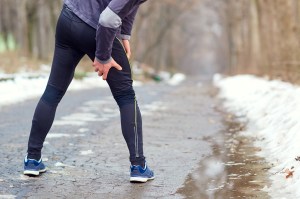
Typical mild muscle soreness will appear within 24 hours of performing the activity, and depending on the individual’s level of regular activity this will last for 1 to 3 days. This type of soreness does not impair normal muscle function. So… you’ll be sore but won’t have trouble doing things, like reaching up for that top shelf or walking up those stairs.
Delayed onset muscle soreness (DOMS) rears its ugly head after the 24 hour mark, between 24 to 72 hours after the exercise, and it holds your muscles hostage for 2 days or up to 1 week. Of course, the duration is once again determined by your level of athleticism. DOMS will inhibit full muscle contraction preventing normal function, meaning you will absolutely dread having to sit down on the toilet. The severity of your discomfort is in relation to how hard you pushed yourself during the session of activity.
I personally don’t believe there is a way to completely prevent muscle soreness, of either type. However, I know that it can be minimized. The absolute best way to minimize it is to move your body regularly, place demand on your musculoskeletal system frequently. When a beginner starts a new exercise routine or activity, or an athlete pushes harder in training, the body goes into the alarm stage and says to itself “Oh crap! I’m not prepared to do this, I need to make some changes ASAP!”.
Typically this stage is 2 to 3 weeks long during consistent work. The best thing to do is to work through this stage and then KEEP GOING. Keep up the great work! Honestly, sometimes the first 2-3 weeks just plain suck. I have scolded myself many times for taking too long of a break from my workouts because going through that alarm stage reminds me of why it’s not worth it to slack off on my program. So once you start something, make it part of your lifestyle, and you’ll lessen the instances of being very sore.
Now since we cannot completely avoid getting sore, proper muscle recovery is essential. These are my very best tips on helping your muscles recover faster and more productively; whether you can implement just a few of these or most of them, anything will benefit your body.
Daily Maintenence:
- The 4 pillars of health and wellness: Nutrition – Hydration – Movement – Sleep. So… along with a clean eating plan focus on getting more protein and add in a BCAA (Branched Chain Amino Acid) supplement powder, similar to the one I use MRM Reload BCAA. Aim for drinking a minimum of half your body weight in ounces of water, and more for those days with a strenuous workout. Sleep is critical for cell regeneration in the body and brain. Getting the proper amount of sleep for your body will allow it to restore itself after your activities.
- Take a high potency Magnesium/Calcium supplement (I have been taking Rainbow Light Magnesium Calcium + for quite some time now.)
- Following up your workout or activity with active stretching is something that I
 firmly believe in. A good session of active and dynamic stretching of the muscle groups that you have used, will promote muscle flexibility, increase range of motion, and facilitate recovery.
Acute Muscle Recovery:
- Move your body! Yes, that’s right! I know you are sore but sitting still is only going to make it worse and your body will just stiffen up. So go have an active recovery day, which means move your body with some light activity. I prefer to go for an easy hike, a flat scenic bike ride, a long walk with the dog, or do elliptical work at the gym. Don’t push your muscles, just increase your heart rate a bit. Putting your muscles through contraction and relaxation increases blood circulation in the fibers, sending essential nutrients to where they need to be.

- Take a soak in an Epsom Salt bath. I highly recommend soaking on the night of a strenuous workout day, and also the following evenings of soreness. This one makes a huge difference, enables you to avoid taking an anti-inflammatory drug, and also helps you sleep.
- Massage… Need I say more? Getting a massage from a therapist that is highly trained in Sports Massage will do wonders for your body. And mind.
- Another practice that I happen to really love is sauna time. I actually enjoy the sauna almost daily, it is that important to me. The benefits of taking a sauna are unbelievable, and it is a great thing for muscle recovery. I choose to perform some of my stretching in the sauna, and I also relax and revive in the sauna.
I really don’t want anyone getting discouraged in their fitness routine because of muscle soreness. I also don’t want anyone pushing their bodies to an unhealthy point by not allowing for adequate recovery. Please try out some of these ideas and see what works to help keep you moving your body through the stages of fitness.
I plan on having future posts coming soon that will provide detailed information, and some instructions, on some of the things I have mentioned here.
Be proud of yourself for doing positive things towards your health, be patient with the process of working on your goals, and be grateful to your body for all that it does for you each and every day.
Love & wellness, Heidi XOXO
P.S.
I love sharing ideas, this is my advice from one friend to another. Stay in touch with me by subscribing to my blog. Everything I have written here is based on years of personal experience and countless hours of my own research. It is all my own personal opinion and I am certainly not making any medical recommendations since I am not a doctor. Please double check that your health is not compromised to where any of these ideas would be inadvisable. Thanks!
 WellBeing by Heidi
Love the line I do not want anyone to get discouraged from the soreness of their muscle or …
LikeLiked by 1 person
Thank you so much!
LikeLike